Excellence
The Faculty of Health Sciences stands out as a leading academic institution dedicated to excellence in health education, research, and community service. It offers a comprehensive and interdisciplinary approach to healthcare, combining theory with hands-on clinical practice. With a strong commitment to producing competent, ethical, and compassionate healthcare professionals, the faculty provides students with access to modern laboratories, experienced lecturers, and well-established partnerships with hospitals and health organizations.
Key advantages include a curriculum aligned with the latest global health standards, active involvement in innovative health research, and opportunities for international collaboration. Students benefit from a dynamic learning environment that encourages critical thinking, evidence-based practice, and a deep understanding of public health issues. Graduates of the Faculty of Health Sciences are well-equipped to face the evolving challenges in the healthcare sector, making a positive impact both locally and globally.
Career Prospects
Graduates from the Faculty of Health Sciences enjoy a wide range of promising career opportunities across various sectors. With the growing global demand for skilled healthcare professionals, alumni are well-positioned to pursue careers in hospitals, clinics, public health institutions, research centers, non-governmental organizations (NGOs), and governmental health agencies.
Depending on their field of study—such as Nursing, Public Health, Nutrition, Physiotherapy, or Medical Laboratory Technology—graduates may work as registered nurses, public health specialists, clinical nutritionists, medical technologists, health analysts, or healthcare administrators. In addition to traditional roles, there are also expanding opportunities in health education, occupational health, health policy, and health promotion, both in the public and private sectors.
Moreover, the faculty equips students with the skills necessary for further academic pursuits or specialization, making them eligible for postgraduate studies, professional certifications, or roles in research and academic institutions. With strong ethical foundations, practical competencies, and interdisciplinary knowledge, graduates are prepared to make a meaningful impact in improving health outcomes at local, national, and international levels.

Profile
“To become a Center of Excellence in health science education, excelling in the field of aviation health at the national level by 2030 and at the international level by 2035”
- Organizing high-quality health science education with mastery of science and technology in the field of aviation health to produce independent, strong-charactered, professional graduates who are ready to enter the workforce.
- Conducting research activities oriented toward outcomes that have a tangible impact on improving the quality of life of society, particularly in the field of aviation health.
- Playing an active role in developing community service programs and empowering communities through aviation health services, while also participating actively and strategically in professional organizations, health education associations, and government institutions in the health sector.
- Implementing responsible, accountable, transparent, and credible faculty governance and management.
- Developing collaboration networks with stakeholders to strengthen the implementation of the Tri Dharma of Higher Education.
-
To produce competent, ethical graduates who are ready to compete in national and international job markets.

-
To encourage active involvement of faculty members and students in research and scientific publication.
-
To improve the quality and quantity of community service activities based on research findings.
-
To expand academic networks and partnerships that support learning processes and quality improvement.
-
To implement an effective and efficient faculty management system that focuses on continuous quality enhancement.
- The implementation of quality education in health sciences through mastery of science and technology in the field of aviation health to produce graduates who are independent, have character, are professional, and ready to work.
Strategies:
-
- Development of education oriented toward excellence in aviation health at the national and international levels
- Development of curriculum relevance and graduate competitiveness at national and international levels
- Encouraging lecturers to obtain doctoral (Ph.D.) qualifications
- Encouraging lecturers to achieve academic functional positions of Professor or at least Associate Professor
- Mapping needs and creating a roadmap for the development of lecturers and educational staff in each study program according to the study program and university development plans
- Structuring workloads and implementing a reward and punishment system for lecturers and educational staff
- Improving the qualifications of non-lecturer human resources and increasing recognition
- Producing research oriented toward outputs that impact the quality of life of the community, especially in the field of aviation health.
Strategies:
-
- Achieving leading research that enhances lecturer expertise and strengthens the reputation of the Faculty of Health Sciences, Unsurya
- Creating a research and innovation culture and climate that complies with the Research Master Plan (RIP), adheres to ethics, and is oriented toward usefulness, learning achievement, environmental awareness, justice, and excellence
- Improving the quality and quantity of research with efficient funding to meet research targets
- Implementation of community service programs in the field of health, particularly aviation health, and active, strategic participation through professional organizations, educational associations, and government agencies in the health sector.
Strategies:
-
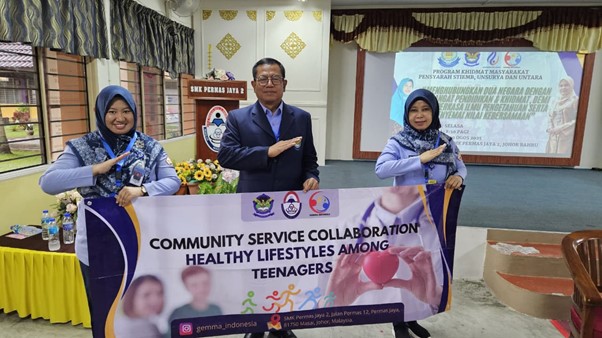
- Optimization of community service by lecturers and students
- Development and application of appropriate technology innovations to support improved community welfare
- The realization of governance and management that is responsible, accountable, transparent, and credible.
Strategies:
-
- Strengthening Higher Education Institutions
- Strengthening University Governance
- Improving financial governance based on recommendations from existing regulations
- Institutional strengthening
- Evaluation of student payment models
- Preparation of a blueprint for the development of facilities and infrastructure as well as information systems
- Establishing cooperation networks with stakeholders to strengthen the implementation of the Tri Dharma of Higher Education.
Strategies:
-
- Strategic partnerships with institutions at home and abroad to address national and international issues